Most parents-to-be spend weeks preparing for the birth of their baby. They attend prenatal classes, pack the hospital bag, choose a stroller and car seat, set up the crib, and carefully pick out those tiny first outfits. But there is one part of the journey that is surprisingly easy to overlook: what happens after you bring your baby home?
The first weeks after giving birth are a time of enormous change. While you are getting to know your newborn, your body is recovering from pregnancy and childbirth, your daily routine is changing almost overnight, and your whole family is adjusting to a new rhythm of life.
Preparing for the postpartum period in advance can make those first days at home feel calmer and more manageable. It is not about having everything perfect. It is about making sure the essentials are ready, practical support is in place, and you have more time to focus on what matters most: recovering, resting and getting to know your baby.
To help you prepare, midwife, international expert, researcher and lecturer Alina Liepinaitiene shares her recommendations on what to organise before giving birth and which postpartum and newborn essentials are worth having at home.
How to Prepare for the Postpartum Period Before Giving Birth
A little preparation before your baby arrives can make a big difference once you return home. From organising practical support to stocking your freezer, these simple steps can help take some of the pressure off during the first weeks postpartum.
Get to Know Your Hospital or Birth Centre
If possible, visit the hospital or birth centre where you plan to give birth before your due date.
Familiarising yourself with the maternity ward, the surroundings and the usual procedures can make the environment feel less unfamiliar when labour begins. Knowing where to go and what to expect may also help you feel calmer and more confident.
Pack Your Hospital Bag Early
Try not to leave your hospital bag until the last minute. Having it packed several weeks before your due date means you will be ready even if your baby decides to arrive earlier than expected.
Your hospital bag may include:
- identification documents;
- pregnancy and maternity records;
- comfortable clothing;
- a nursing bra;
- maternity pads;
- season-appropriate clothes for your newborn.
Keep the bag somewhere easy to grab and make sure your partner or support person knows where it is.
Prepare Easy Meals and Stock Your Kitchen
Cooking may be one of the last things you want to think about when you are recovering from childbirth, sleeping in short stretches and caring for a newborn.
Before your due date, stock up on useful pantry staples and prepare a few meals that can be frozen and reheated easily.
Divide meals into convenient portions, label the containers and freeze them. Even a small supply of ready-made meals can make those first postpartum days considerably easier.
Create a Postpartum Support Plan
One of the most valuable things you can prepare before giving birth is not something you can buy: help.
Talk to your partner, family members or close friends before the baby arrives and discuss who may be able to support you.
Consider:
- who can help care for the baby while you rest;
- who can help with cleaning and household chores;
- who can pick up groceries or prepare meals;
- who can look after older children;
- who you can call if you need practical or emotional support.
Accepting help after childbirth is not a luxury. Recovery, rest and support are important parts of the postpartum period.
Prepare a Practical Space for Your Baby
Your newborn does not need an elaborate nursery from day one. What matters most is having a few safe, practical spaces that make everyday care easier.
Before your baby arrives, organise where your baby will sleep and where you will change diapers and keep frequently used essentials.
It can also be helpful to have gentle lighting nearby for nighttime feeds and diaper changes, so you do not need to turn on bright overhead lights in the middle of the night.
Plan How You Will Get to and From the Hospital
Decide in advance who will take you to the hospital when labour begins and who will bring you and your newborn home afterwards.
Make sure the car seat is ready and properly installed before your due date.
Having these details sorted in advance means fewer decisions to make when labour starts.
Arrange Care for Older Children and Pets
If you have older children or pets, make a plan for who will care for them while you are in hospital and during the first days after you return home.
It is also useful to have a backup person in case your original plan changes unexpectedly.
Prepare for the Emotional Side of Postpartum Recovery
Preparing for life after birth is about much more than buying diapers and baby clothes.
The postpartum period can bring significant emotional changes as well as physical ones. Hormonal shifts, sleep deprivation, physical recovery and the responsibility of caring for a newborn can all affect how you feel.
Before giving birth, give yourself permission to rest, learn simple relaxation or breathing techniques and talk openly with your partner or support network about the kind of help you may need.
You do not need to have everything under control from the first day.
Support Your Pelvic Floor
Pregnancy and childbirth place significant pressure on the pelvic floor.
Pelvic floor exercises, often known as Kegel exercises, may help strengthen these muscles during pregnancy and support postpartum recovery.
If you are unsure which exercises are appropriate for you, speak with your midwife, doctor or pelvic health physiotherapist.
Learn About Breastfeeding Before Birth
If you plan to breastfeed, learning the basics before your baby arrives can help you feel more prepared.
You may find it helpful to attend a breastfeeding class, speak with a midwife or lactation consultant, or read reliable information about positioning, latching and common breastfeeding challenges.
Breastfeeding can take time for both mother and baby to learn. Knowing where to find professional support can be just as valuable as knowing the basics yourself.
Keep Important Contacts Within Easy Reach
The first days after birth are not the ideal time to start searching for phone numbers.
Create a simple list of important contacts before your due date, including:
- your midwife;
- your doctor or healthcare provider;
- a lactation consultant;
- family members or friends who have offered to help.
Keep the list somewhere easy to access and share it with your partner or support person.
Simplify Your Household Routine
Your home does not need to run perfectly after your baby arrives.
Before giving birth, think about which household tasks can be postponed, simplified or delegated.
Maybe groceries can be delivered. Maybe cleaning can wait. Maybe family members can bring meals instead of arriving as guests who need to be entertained.
During the first weeks postpartum, your recovery and your baby’s needs are the priority.
Postpartum and Newborn Essentials to Have at Home
You do not need to buy every baby product on the market before giving birth. A thoughtfully prepared collection of everyday essentials is usually much more useful than cupboards full of things you may never use.
Here are some practical items worth having ready before you bring your newborn home.
Newborn Essentials
Consider preparing:
- diapers in a few sizes, including newborn, size 1 and size 2;
- disposable or reusable changing pads;
- gentle baby wipes;
- water-based wipes for sensitive newborn skin;
- a warm baby blanket;
- a few baby hats;
- several sets of season-appropriate clothing;
- a crib or bassinet;
- a suitable mattress;
- fitted sheets and appropriate bedding.
You do not need huge quantities of newborn-size clothing or diapers. Babies grow quickly, and the size that fits best can vary from one newborn to another.
Postpartum Essentials for Mom
It is easy to focus entirely on what the baby will need, but the mother needs practical care and comfort too.
Useful postpartum essentials may include:
- comfortable nightgowns or nursing tops;
- nursing bras;
- postpartum pads;
- a thermometer;
- basic first-aid and postpartum care supplies;
- appropriate pain relief recommended by your healthcare provider;
- wound-care products if needed;
- a nursing pillow;
- a warm blanket;
- a heating pad.
Keep frequently used items somewhere easy to reach, especially in the areas where you expect to spend most of your time feeding, resting and caring for your baby.
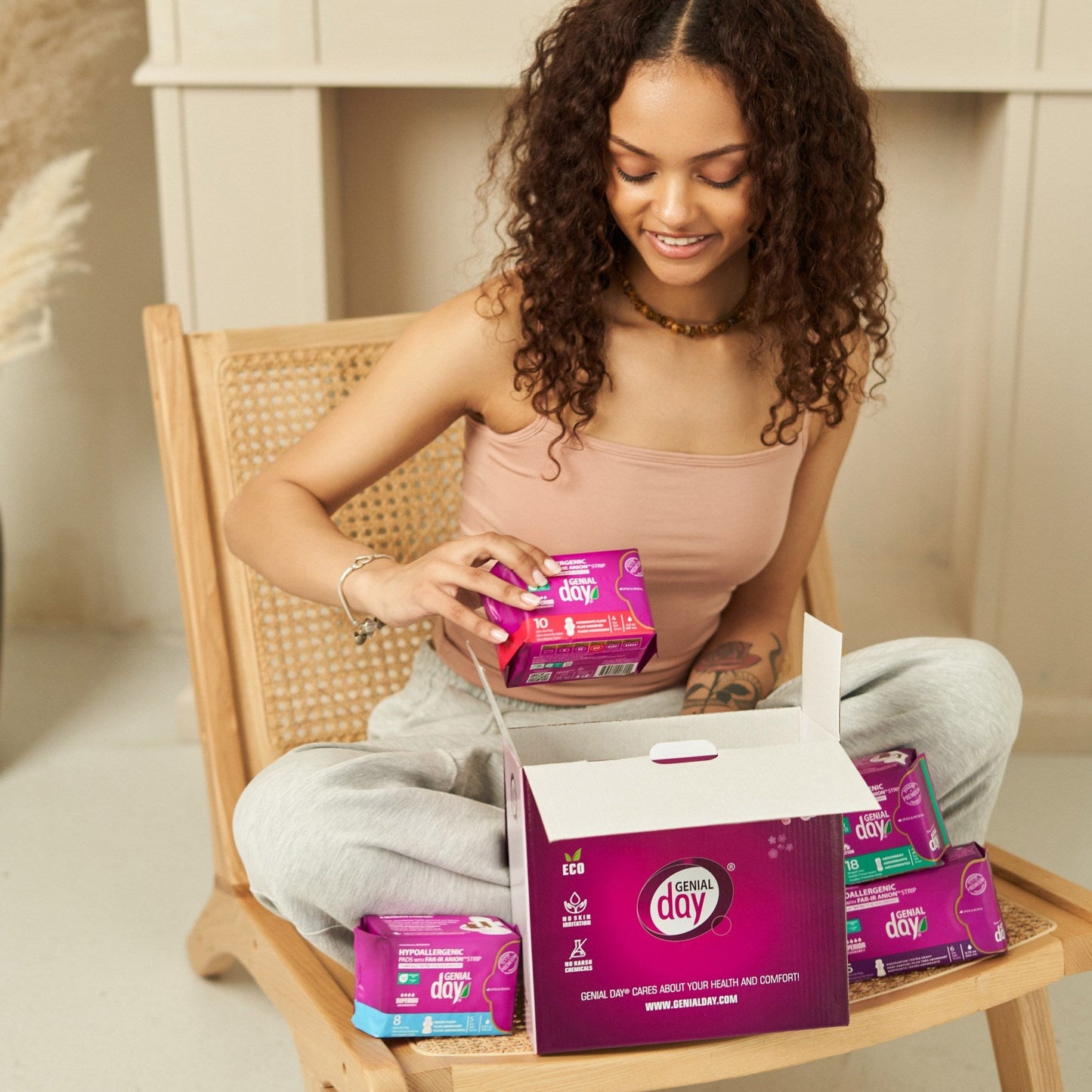
Postpartum Care Kit - essential hygiene products for sensitive postpartum skin, conveniently prepared in one place.
Having postpartum care essentials ready before your baby arrives means one less thing to think about when you return home and your focus shifts to recovery and caring for your newborn.
Preparing for Postpartum Is About More Than Shopping
A postpartum checklist can help you feel organised, but preparing for life after childbirth is not simply about buying the right products.
Meals can be prepared. Hospital bags can be packed. Diapers can be stocked.
But some of the most important things you can arrange in advance are time, rest, practical help and realistic expectations.
The first weeks with a newborn do not need to look perfect. Your home may be messier than usual. Your routine will change. Some days may feel easy, while others may feel overwhelming.
The more everyday responsibilities you can simplify before your baby arrives, the more space you create for what truly matters during those first weeks: your recovery, your well-being and time with your newborn.
You May Also Like
Postpartum Recovery: What to Expect in the First Weeks After Giving Birth
Baby Blues vs. Postpartum Depression: How to Recognize the Difference