During pregnancy, a lot of attention goes into preparing for birth. Women read about contractions, breathing techniques, birth plans, and everything their baby will need. But there is much less conversation about what happens after the baby is born.
How long does postpartum bleeding last? Why do you sweat so much after giving birth? When can you use tampons or a menstrual cup again? Why does your intimate area feel more sensitive than before? And most importantly, how can you tell what is a normal part of postpartum recovery and when you should seek medical help?
To answer these questions, we spoke with midwife, international expert, researcher, and lecturer Alina Liepinaitiene, who has more than a decade of experience working with adolescents, pregnant women, new mothers and their families, as well as women going through perimenopause and menopause.
How Long Does Postpartum Recovery Take?
The postpartum period generally refers to the first 6–8 weeks after giving birth. It is a time of significant physical and emotional recovery, although every woman's experience is different.
For some women, this period feels positive and empowering. For others, it can be challenging to adjust to a completely new daily routine.
Postpartum recovery is not simply about allowing the body to heal after childbirth. Hormone levels are changing, the uterus is returning to its pre-pregnancy size, and the body is recovering from pregnancy and birth. At the same time, there is a major emotional and psychological adjustment to life with a newborn.
The most intensive physical recovery usually happens during the first 2–3 weeks, although fully adjusting can take much longer.
Recovery can be affected by many factors, including:
- how the pregnancy progressed;
- the type of birth;
- postpartum complications;
- breastfeeding;
- emotional well-being;
- the mother's overall health.
Did you know?
- Immediately after childbirth, the uterus weighs around 1 kg. Within approximately 6 weeks, it shrinks to around 60–80 g, close to its pre-pregnancy size.
- Uterine contractions often feel stronger after each birth, so women who have given birth two or three times may experience more intense postpartum cramps.
- Cramping can become stronger during breastfeeding. This is a positive sign that the uterus is contracting effectively and the risk of bleeding is decreasing.
How Long Does Postpartum Bleeding Last?
Postpartum bleeding usually lasts around 4–6 weeks.
During the first few days after giving birth, the discharge is typically bright red and relatively heavy. Over time, it gradually becomes brownish, then yellowish, and finally whitish.
Some women notice that postpartum bleeding seems heavier in the morning. In most cases, this is normal. Blood and discharge can collect while you are lying down at night, so a larger amount may come out when you stand up.
Over the following weeks, the amount of bleeding should gradually decrease.
What Is Lochia After Birth?
The vaginal discharge that occurs after childbirth is called lochia.
Lochia is a mixture of blood, mucus, uterine lining, and remaining placental tissue that leaves the uterus as it heals after pregnancy.
Lochia usually lasts 4–6 weeks, although for some women it may continue for up to 6–8 weeks.
Its appearance changes throughout postpartum recovery:
- Lochia rubra – dark or bright red discharge during the early stage.
- Lochia serosa – pinkish or brown discharge.
- Lochia alba – yellowish or whitish discharge during the final stage.
Lochia is not the same as a menstrual period. It is not caused by ovulation or the menstrual cycle. Instead, it is a normal part of the body's healing process after childbirth.
Your period returns when your body begins ovulating again.
What Are Normal Postpartum Symptoms?
Your body goes through many changes after childbirth, and some postpartum symptoms can be unexpected.
Common symptoms that are usually considered part of normal postpartum recovery include:
- Mild to moderate abdominal cramping.
- Period-like pain, which may be stronger during the first few days and especially while breastfeeding.
- Postpartum bleeding and lochia that gradually become lighter and less heavy.
- Tenderness around the perineum or C-section scar.
- Increased sweating, particularly at night.
- Breast fullness or tenderness as milk production begins.
- Tiredness and emotional ups and downs during the first days after birth.
Breastfeeding can temporarily make uterine cramps stronger because the release of oxytocin causes the uterus to contract.
Night sweats are also common because the body is getting rid of excess fluid accumulated during pregnancy.
These symptoms are usually a natural part of postpartum recovery.
When Should You Seek Medical Help After Giving Birth?
Although many postpartum symptoms are normal, some can indicate complications and should not be ignored.
Seek medical attention immediately if:
- bleeding becomes very heavy and soaks through one sanitary pad within an hour;
- your temperature rises above 38°C;
- you experience severe or worsening pain that does not improve after taking standard pain medication;
- a perineal tear or C-section wound becomes red, opens, or begins leaking fluid;
- you develop chills;
- you have difficulty breathing;
- you experience heart palpitations;
- you experience severe depression or thoughts of harming yourself or your baby.
You should also contact a healthcare professional if your postpartum discharge develops a strong, unpleasant smell or you notice very large blood clots.
Are Postpartum Night Sweats, Fatigue, and Mood Swings Normal?
Yes. Postpartum fatigue and night sweats are very common. They are usually related to hormonal changes and the body's adjustment after pregnancy.
Mood swings during the first 1–2 weeks after giving birth are also common. This is often referred to as the baby blues.
However, if emotional symptoms become very intense or continue for more than two weeks, it is important to speak with your family doctor, midwife, or obstetrician-gynaecologist.
Support from family and friends can also make a significant difference. Sometimes professional advice is essential, but having someone who listens, supports you, or simply stays by your side can be equally valuable.
Why Is the Intimate Area More Sensitive After Childbirth?
Many women notice increased sensitivity, irritation, or discomfort around the intimate area after giving birth.
There are several reasons for this.
During vaginal birth, the vaginal and perineal tissues stretch significantly. They may become swollen, tear, or require an episiotomy and stitches. As a result, soreness, inflammation, and increased sensitivity may remain for some time.
Lochia and constant moisture can cause additional irritation, while healing stitches and scar tissue can make the area even more sensitive.
Hormonal changes also play an important role.
During breastfeeding, oestrogen levels decrease. This can make vaginal tissue drier, thinner, and more sensitive.
Constipation, prolonged sitting, tiredness, and emotional stress may also increase discomfort.
Postpartum Intimate Care: How to Care for the Area After Birth
One of the most important rules of postpartum intimate care is simple: keep the area clean and dry.
Gently wash the external intimate area with warm water, change postpartum pads regularly, and choose hygiene products designed for postpartum bleeding.
Avoid heavily fragranced products and harsh antiseptics, as these may irritate sensitive skin.
Postpartum discharge should not have a strong, unpleasant smell.
If you notice an unusual or increasingly strong odour, especially together with pain, fever, or changes in discharge, contact a healthcare professional.
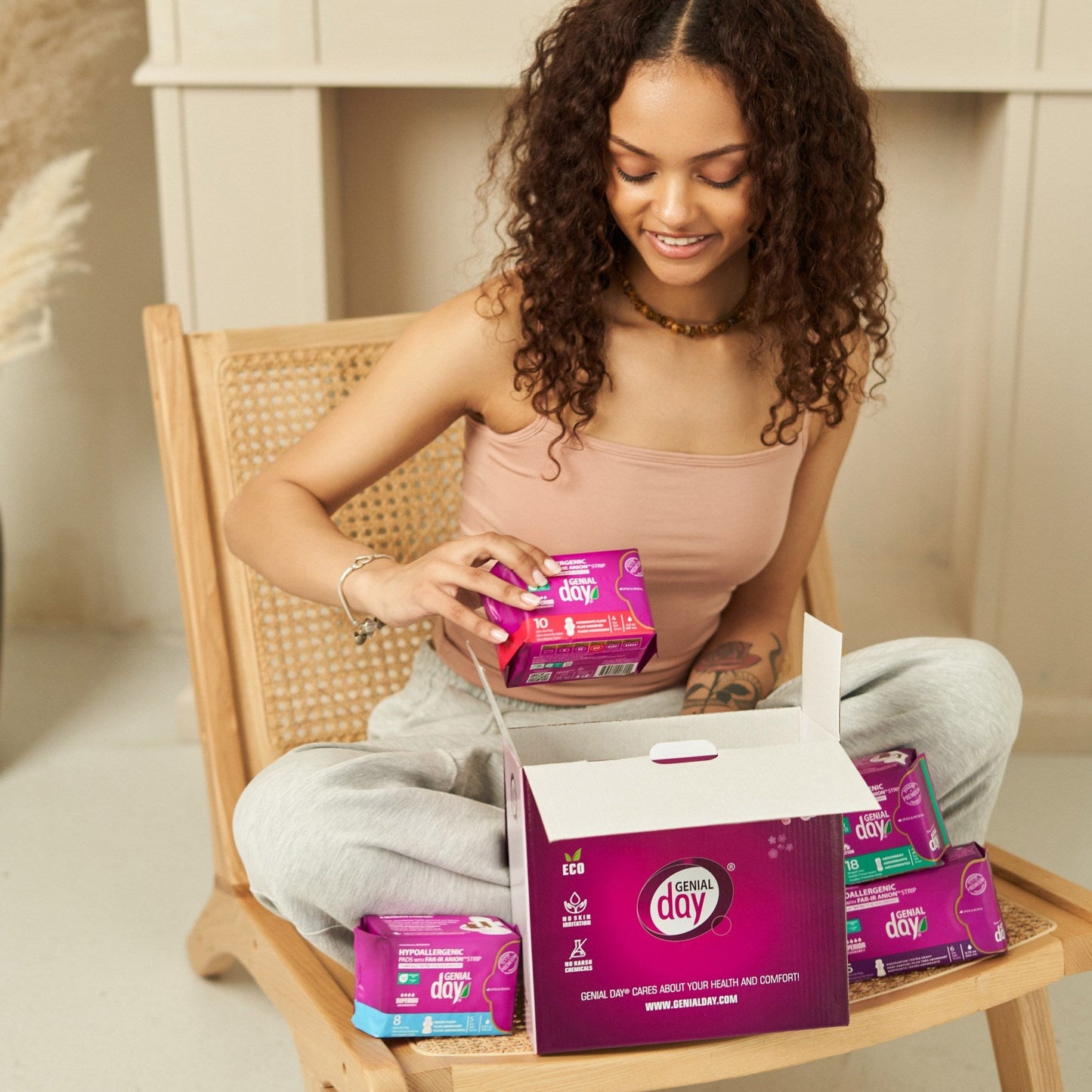
Postpartum care set – essential hygiene products for sensitive postpartum skin, all in one place.
How to Choose the Best Postpartum Pads
Choosing the right postpartum pads can make the first days and weeks after childbirth much more comfortable.
There are six main things to consider.
1. Absorbency
Postpartum bleeding is usually heaviest during the first few days, so choose dedicated postpartum pads or highly absorbent sanitary pads.
2. Size
The pad should be long and wide enough to provide good coverage around the perineal area and help prevent leaks.
3. Material
Look for soft, skin-friendly, fragrance-free materials.
4. Skin-Friendly Design
Avoid unnecessary irritating ingredients, particularly if you have sensitive skin, tears, stitches, or healing wounds.
5. Comfort
A postpartum pad should stay securely in place without rubbing or causing additional discomfort.
6. Hygiene
Pads should be changed regularly to prevent prolonged moisture and reduce the risk of skin irritation.
Size 6 postpartum pads – soft, highly absorbent postpartum protection for heavy bleeding and sensitive skin.
Should You Avoid Fragranced Products After Giving Birth?
Yes. It is generally best to avoid heavily fragranced products and harsh cleansers during postpartum recovery.
Fragrances, alcohol-based products, and strong cleansers may irritate sensitive skin and the external intimate area.
For most women, warm water and clean, gentle hygiene products are enough.
If you choose to use an intimate wash, look for a gentle formula specifically designed for the intimate area and free from fragrances and colourants.
Intimate washes should only be used externally.
How Often Should You Change Postpartum Pads?
Postpartum pads should generally be changed at least every 2–4 hours, or more often if they become saturated with blood or discharge.
You may need a more absorbent postpartum pad at night.
Regular changes are important because prolonged moisture can irritate sensitive skin. Changing pads frequently helps keep the area clean, dry, and comfortable.
When Does Your Period Return After Giving Birth?
The return of your menstrual cycle after childbirth is very individual.
For women who are not breastfeeding, or who breastfeed only occasionally, periods often return within 6–8 weeks after birth, although they may return anywhere from around 4 to 12 weeks postpartum.
For mothers who exclusively breastfeed, periods may not return for several months or even until breastfeeding ends.
However, it is important to remember that ovulation can happen before your first postpartum period.
This means you can become pregnant even if your periods have not yet returned.
When Can You Use Tampons or a Menstrual Cup After Giving Birth?
Period underwear can be used immediately after childbirth as an additional layer of protection together with a postpartum pad.
However, tampons and menstrual cups should generally be avoided for at least 6–8 weeks after giving birth.
Before using them again, attend your postpartum check-up and make sure the perineum and vaginal tissues have healed properly.
High-waisted period underwear – extra leak protection during postpartum recovery.
When worn together with a postpartum pad, the wings remain covered and have less contact with the skin. The high waist sits comfortably around the abdomen for added comfort.
How Long Does the Perineum Take to Heal After Childbirth?
For most women, the initial pain and swelling improve within 1–2 weeks.
Stitches usually dissolve within 1–3 weeks, although complete tissue recovery can take up to 6 weeks or longer.
More severe perineal tears can sometimes take several months to heal fully.
To make postpartum recovery more comfortable, you may find the following helpful:
- cold compresses during the first 24 hours;
- warm sitz baths later in recovery, if recommended by a healthcare professional;
- gentle washing with warm water;
- drinking enough fluids;
- eating a fibre-rich diet;
- taking pain medication recommended by your doctor;
- starting pelvic floor exercises once they no longer cause significant pain and your healthcare professional says it is safe.
Why Is Pelvic Floor Recovery Important After Childbirth?
Pregnancy and childbirth can weaken or overstretch the pelvic floor muscles and affect how well they work together.
This may lead to:
- urinary incontinence;
- bowel incontinence;
- a feeling of heaviness in the pelvic area;
- a sensation that something is “dropping down”;
- reduced comfort during sex.
Paying attention to pelvic floor recovery after childbirth may help reduce the risk of longer-term problems.
If these symptoms do not improve or begin interfering with your daily life, speak with a doctor or pelvic floor physiotherapist.
Postpartum Recovery Is Not a Race
After a baby is born, it is natural for most of the attention to shift towards the newborn. But during this time, the mother needs care and attention too.
Postpartum recovery is not a race.
Some women recover more quickly, while others need more time. Some feel great again after just a few weeks, while others need longer to heal physically and adjust emotionally.
The most important thing is to ask for help when you need it, accept support from the people around you, and remember that both your body and your emotions need time to adjust to this new stage of life.